

What the bag is telling you
· Joe Christian
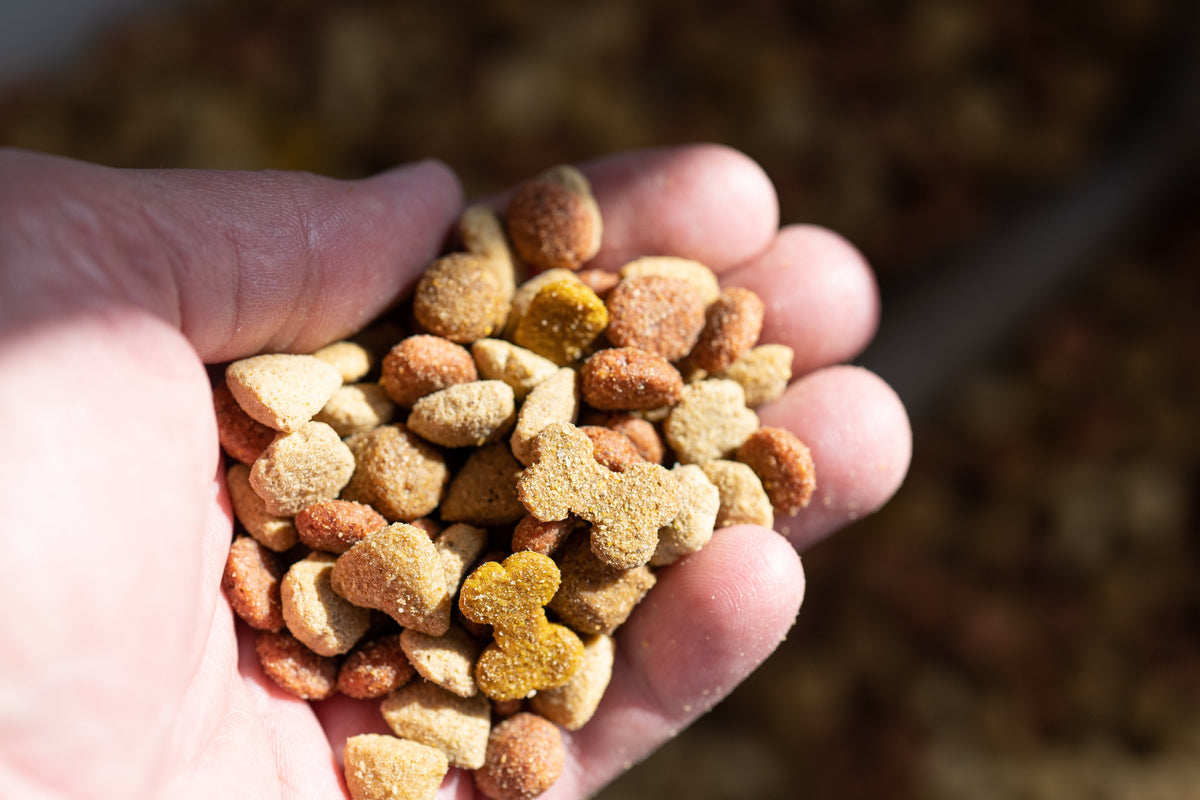
I have been standing behind a counter selling dog food since 2009. In that time I have watched a lot of people turn a bag over, squint at the back of it and put it back down again none the wiser. It's not their fault. Most bags are written to be admired from the front and skimmed from the back.
So here is the short version of what I tell people in the shop, and what I would tell you if you walked in this morning.
The front of the bag is marketing. The back of the bag is the food
The picture of the chicken breast and the sprig of rosemary is not the recipe. The recipe is the composition list, usually in small print, usually on the back, usually beside a table of percentages nobody explains.
Read that list first. It is ordered by weight, heaviest first. Whatever sits in position one is the bulk of what your dog is eating.
Named meat beats mystery meat, every time
You want to see the animal named. Chicken. Salmon. Lamb. Turkey.
What you do not want is "meat and animal derivatives". That phrase is legal, it is common and it tells you absolutely nothing about what went into the bag or where it came from. It can change batch to batch depending on what was cheap that month. The same goes for "cereals" with no cereal named, and for "derivatives of vegetable origin".
If a manufacturer is proud of the ingredient they name it. If they are not, they do not.
The fresh meat trick
This is the one that catches nearly everyone, and it is the reason I keep making videos about it.
A bag says 26% fresh chicken. Sounds decent. Here is the thing. Fresh chicken is roughly 70% water. Dry food comes out of the oven at about 8% moisture. So that 26% fresh chicken gets cooked down to somewhere around 8% actual chicken in the finished kibble.
Dried chicken, or chicken meal, has already had the water taken out before it is weighed. So 26% dried chicken is 26% chicken in the bag. The word "meal" sounds worse and is usually the more honest number.
The lesson is not that fresh meat is bad. It is that you cannot compare a fresh meat percentage against a dried meat percentage and pretend they are the same thing. A lot of bags are counting on you doing exactly that.
Watch for ingredient splitting
Composition lists are ordered by weight. If you split one ingredient into three, each part weighs less and each part drops down the list.
So instead of peas sitting at number one, you get peas at four, pea protein at six and pea fibre at eight. Add those back together and you have a very different picture of what the food actually is. The same trick works with rice, rice flour and rice bran, or with maize, maize gluten and maize flour.
Add up the relatives before you make your mind up.
Protein percentage is not the same as protein quality
The analytical constituents panel will tell you crude protein 28%. That number does not care where the protein came from. Feathers are protein. Hooves are protein. Pea protein isolate is protein.
A 24% protein food built on dried chicken and salmon will usually do more for a dog than a 30% food propped up with plant protein concentrates. Look at the composition list to see where the protein is coming from, then look at the percentage.
Grain free is not automatically better
Grain free suits plenty of dogs, particularly the itchy ones, and I sell a lot of it.
It is not a moral position though. A dog with no grain sensitivity does perfectly well on a food with oats or brown rice in it. What matters far more is whether the meat content is real and whether the rest of the ingredients are doing a job or just filling space. Grain free with 18% meat and a mountain of potato is not an upgrade on anything.
Cost per feed, not cost per bag
The bag that looks dear is often the cheaper food.
Higher meat content and better digestibility means you feed less of it per day. Take the feeding guide on the back, work out the daily grams for your dog's weight, divide the bag price by that and you have the real number. I have had customers switch to a bag that costs eight euro more and end up spending less over a month, with firmer stools and a better coat into the bargain.
Do that sum before you decide anything is expensive.
The bit you can see on your own dog
None of this is theory. You will know within six weeks whether a food is working.
Coat condition, stool quality and consistency, energy that is steady rather than spiky, ears and paws that are not being chewed raw, weight holding where it should. That is the report card. If those are all good, the food is right for that dog whatever the bag says.
Change food gradually over about a week, mixing the new into the old, or you will be cleaning the kitchen floor at two in the morning and blaming the wrong thing.
I have put a lot of this on video
Reading a composition list is much easier to understand when someone is holding the bag up and pointing at the line. That is why I have been doing short videos on TikTok, Instagram and YouTube working through real bags off our own shelves. The fresh meat versus dried meat one, the ingredient splitting one, the "meat and animal derivatives" one, plus plenty of questions people have sent in about their own dogs.
Come and find me at @joeatpetshopnearme.ie on TikTok, or @petshopnearme.ie on Instagram. Send a question in if you have one. I answer them.
Or just ask
If all of the above sounds like homework, that is fair enough. Bring the bag you are using into Enniscorthy or Wicklow and I will read it with you. Two minutes and you will know exactly what you have been buying.
That is what the counter is for.
Joe


